

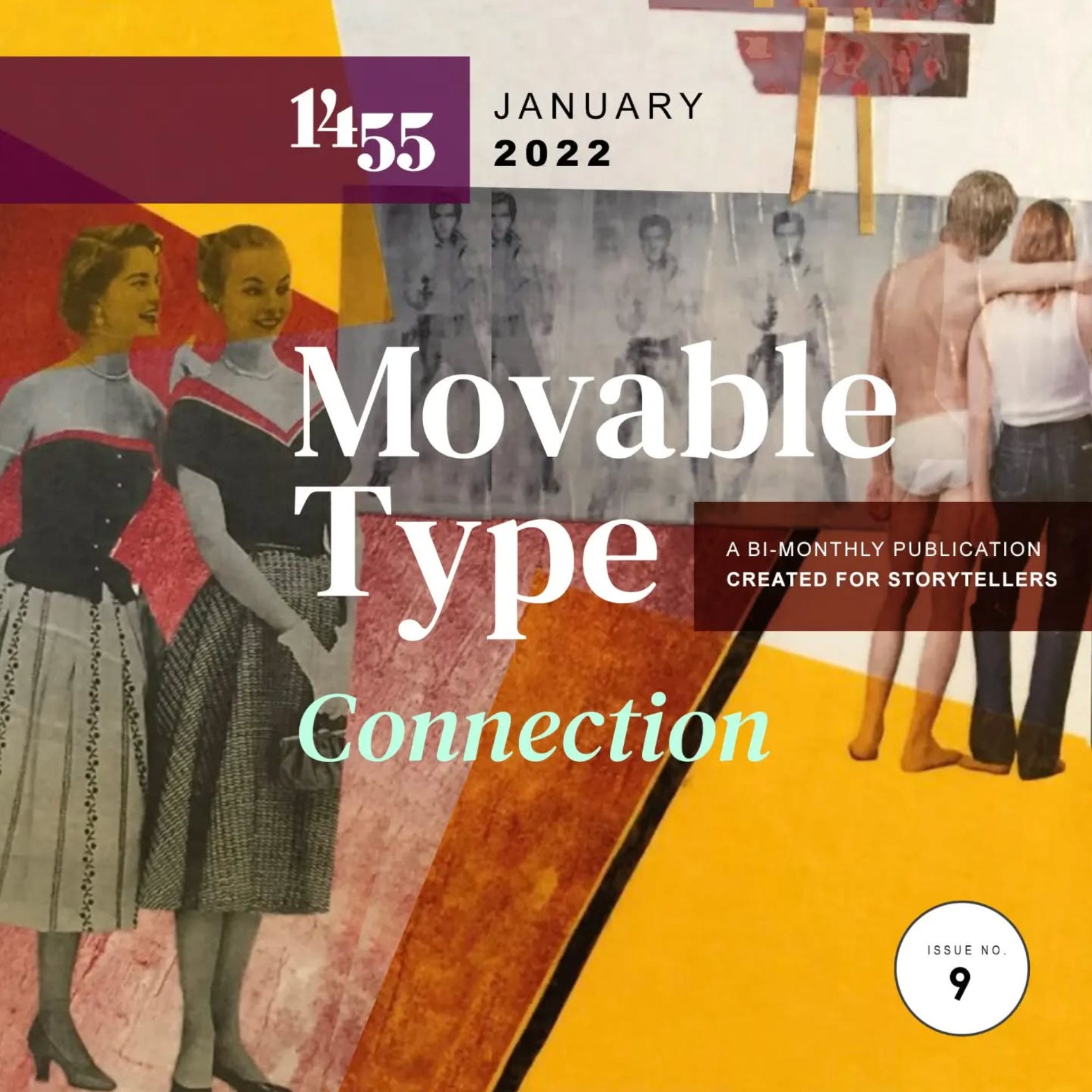
Connection: The Primary Impulse of Art
Why do we tell stories?
To inform, to inspire, to connect.
The miracle of art is the way it enables us to express things at once inextricable from ourselves and more encompassing than the sum of an individual existence. More, it facilitates an exchange, across language, time, and space. In short, it provides the opportunity for connection.
The methods and meanings of connection are in constant flux, just as art evolves, over time. Back in a different, arguably simpler era, connection occurred in the present tense, in person. Or did it? Another miracle of art is the way it defies death (literal, figurative): so long as human eyes, ears, and hearts are available to receive it, art can align us through centuries. Who hasn’t, on occasion, felt closer to an author or work of art than their closest relatives?
Art has the possibility of teaching us so many things, and in ways that cut across economic, geographic, and even historical barriers. An exceptional poem, song, story, painting, or photograph can present experiences from a life we don’t know or could only imagine, or it can remind us that most human beings are desperate for the same things: love, peace, understanding, justice, compassion, community, beauty.
Art reveals recurring themes (good, bad, ugly) in human history, and homes in on what makes kings, soldiers, parents, orphans, the working poor, and the wealthiest one percent identical: we all, after a fashion, are seeking meaning in our brief time on this planet. Stories heal and inspire when they force us to ask questions, understand there are often many answers to any question, and that by seeing ourselves in others (and vice versa), we’re less likely to be intolerant, lazy, or unkind. There is a quiet power in the ways art unites us.
Creative storytelling is never a static act. Whether intended to unify or disrupt, the reaction, when it’s received, is an antidote to solitude (sometimes even despair)—and instigates progression, on personal or societal levels. The impact of art can be empowering, and a human being has changed, invariably for the better, having been part of the connection.
***
Our world recently lost two cultural icons who dedicated their lives to describing—and demonstrating—the power of story: why we do it, what happens when it resonates, and how we’re moved by the magic of artistic expression. 1455 dedicates this issue of Movable Type to the memory of Joan Didion and bell hooks.
I write entirely to find out what I’m thinking, what I’m looking at, what I see and what it means. What I want and what I fear.
–Jon Didion
The function of art is to do more than tell it like it is—it’s to imagine what is possible.
–bell hooks
Join Our Community
At 1455, we believe story connects, heals, and transforms. If you share that belief, we invite you to subscribe to us here on Substack for new interviews, essays, and events celebrating the creative community.
1455 Needs Your Support
Your support helps us keep all 1455 programs free and accessible—please consider making a donation to sustain our mission and amplify diverse voices around the world.
Follow 1455
Website: 1455litarts.org
Instagram: @1455litarts
Facebook: facebook.com/1455litarts
X (Twitter): @1455litarts
YouTube: 1455 Literary Arts Channel
LinkedIn: 1455 Literary Arts