


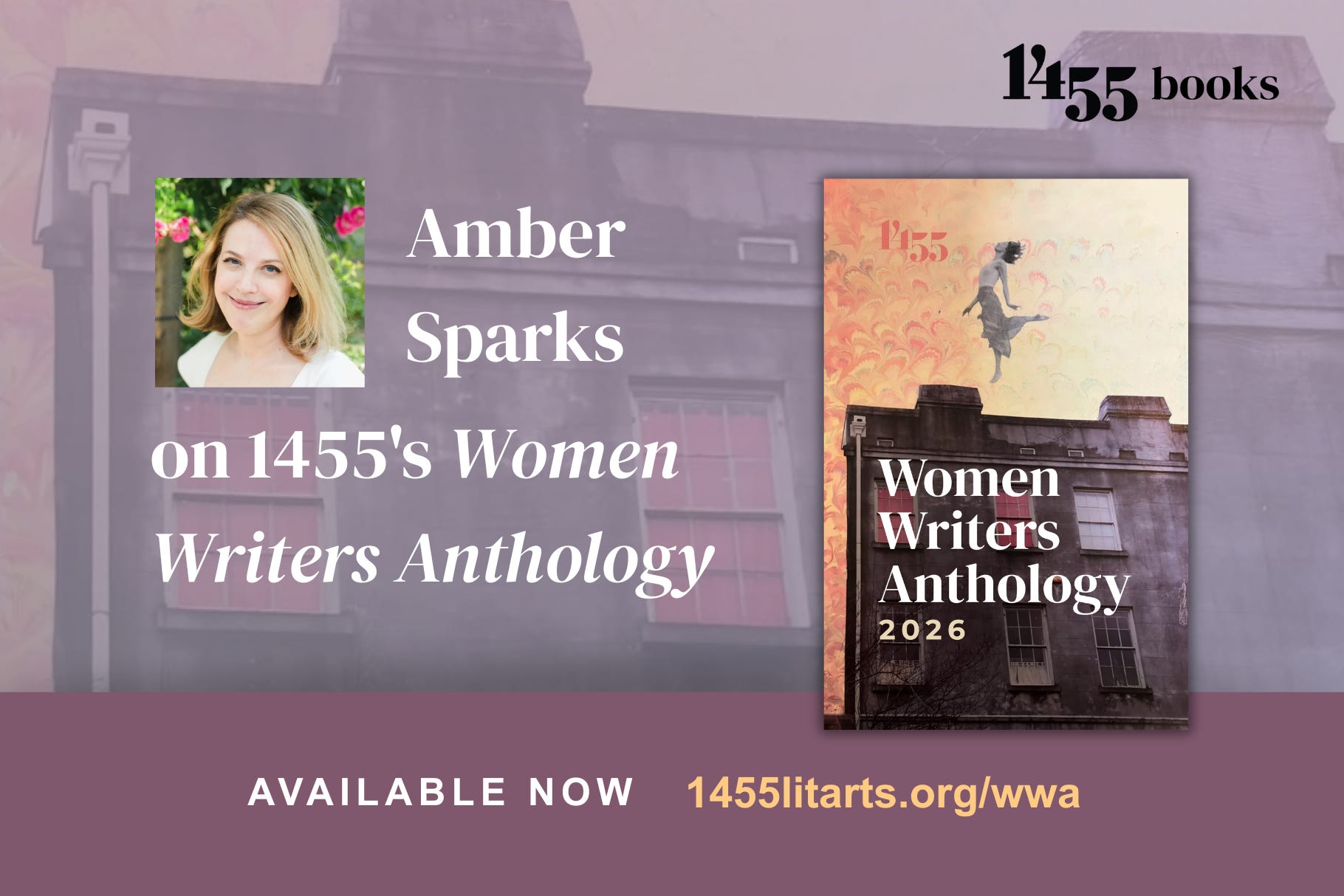
Before I knew Amber Sparks, I was a fan. If you’ve read a single sentence she has ever written, you understand. If you are not yet acquainted with her work, you have much to look forward to. Here’s the briefest of bios, which will link you to her highly recommended Substack: Amber Sparks is the author of four short story collections and a novel, Happy People Don't Live Here. She also writes about film and books. She lives in Washington, DC with two people and two cats.
I am delighted and honored to share her kind words, an intro/blurb/call to arms all in one.
Each morning, I ride the city bus to take my daughter to school, and then another city bus to work. I spend most of my long rides imagining the lives of my fellow riders, particularly (and sorry, men, but) the women. I wonder at their jobs, their hobbies, their family; I construct secrets for them, elaborate histories, and as I imagine their lives, woven through the world like ivy, I wonder how they imagine mine. I do all this because to me, women are stories, and I cannot see a woman without falling into a dream about what her story might be.
If all the disparate, talented writers (and there are many!) in 1455’s Women Writers Anthology have one thing in common, it is this: they, too, are women who see stories in women. And the variety of stories told here, in poetry, in prose, is astonishing and endless. The editors have gone out of their way to keep the book of women wide open, and the results are like a map of the world. There are 17 countries represented, 32 states, 165 writers in total. It is one of the largest, most truly global attempts to make a space for women to be heard that I have ever read, and to pick it up and read a story, a poem, an essay, feels like joining a vast chorus of women writers, with every thought imaginable about modern life.
The stories are as varied as the writers, all the wild visions here embraced. The women in this strange, brilliant collection are shapeshifters: women who are cats, women who contain doors, women who embody hunger. These are powerful, prophetic women and they are full of everything in the world but silence; they are volumes, libraries, collections of dreams.
My recommendation? Treat this collection like a spell book. Open it to any page, and you change yourself by meeting someone else’s story. You might land on a poem like Malinda Dake’s, where “it’s a battlefield / your mind a machete.”
You might post up in front of a painting in a story by Cuba Ukoh, “a naked woman chilling by a stream, but it’s how she’s chilling though. Her body begins on the canvas then extends out of it with what I suspect is brass. The tender way she leans forward on one arm with intense curiosity painted into her eyes, as if she’s yearning to crawl into this room from another world.”
Or you might end up absorbed in Lena Durhally’s timely and crucial reflections on a Palestinian woman trying to find her voice “in a hostile world.”
This book will introduce you to women trying to find their voices, yes. But it will also remind you that every woman has a voice, a story, a tale to tell and a weapon or a spell or a song that finds the way into that story. Every story, poem, essay here is a compass, and it points us toward the lost kingdom of women’s lives.
Enjoy getting lost, and enjoy the finding.
Copies available everywhere you buy books, including Bookshop.org and Amazon.
About the 1455 Women Writers Anthology
Silence speaks—if we’re willing to listen. 1455’s Women Writers Anthology brings together bold and compelling work from women across genres— poetry, fiction, and nonfiction—exploring the theme of silence in all its complexity. From what is withheld to what insists on being heard, these pieces examine silence as refuge, fortitude, erasure, and revelation. These stories and poems challenge us to reconsider what goes unspoken— and why—and how voice itself becomes an act of power. Through moments of quiet resistance, reflection, and transformation, this collection illuminates both what silence conceals and what it ultimately exposes. As part of the inaugural list from 1455 books, this anthology showcases a commitment to amplifying diverse voices, expanding access, and redefining whose stories frame our literary landscape.